


At the heart of everything we make is a single fruit: the Damson plum.
It looks simple, and in most ways it is. But a lot has to go right: good soil, enough sun, the right moment to pick, a careful hand to guide it. Nothing about the result is invented. It is the plum, shaped by where it grew and by how long we were willing to wait for it.

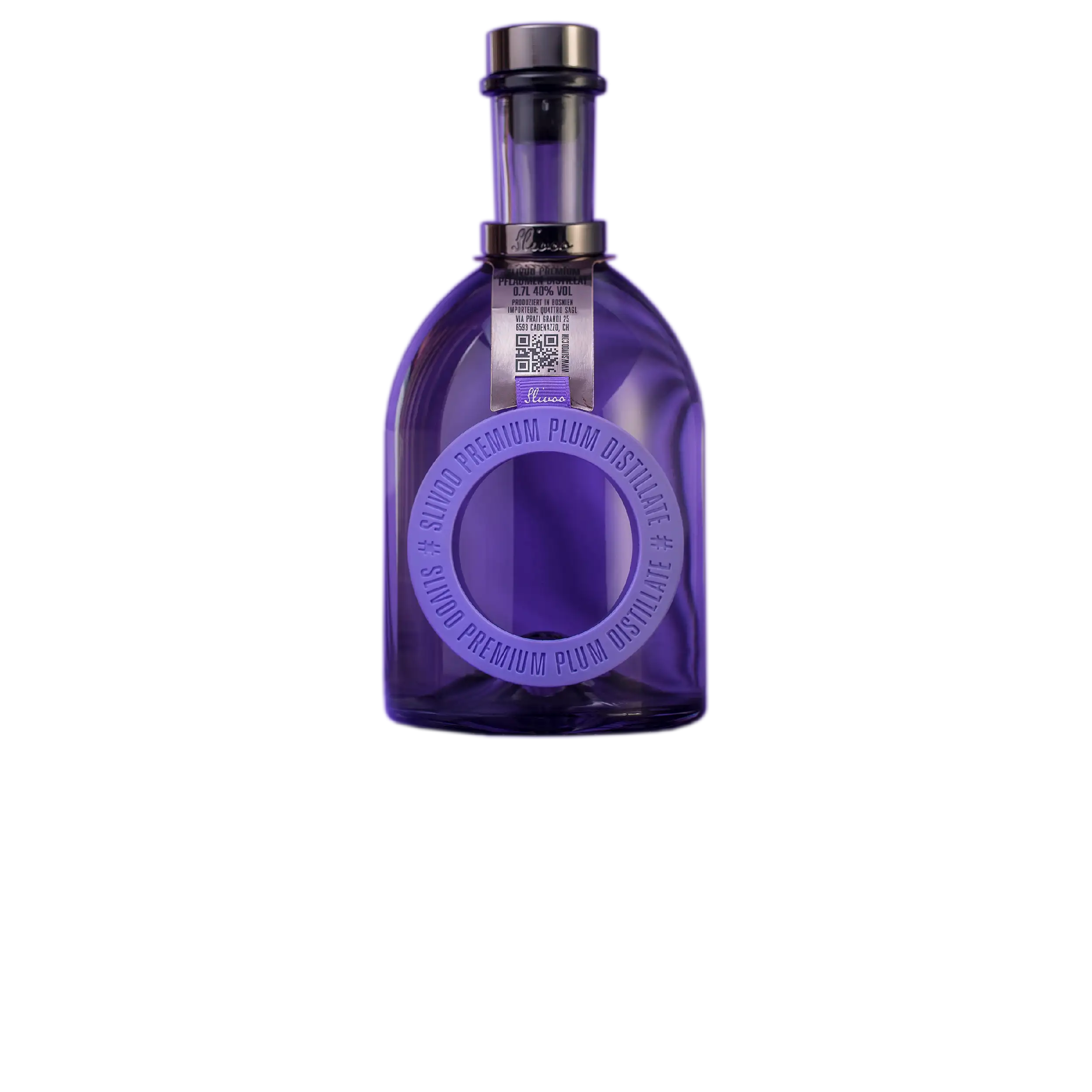
The bottle is plain on purpose. It sits heavy in the hand, and the dark glass keeps the light off the spirit inside. The round label is raised, so you feel it before you read it, and it only catches the eye from the right angle. None of it is for show. It is there to be handled.

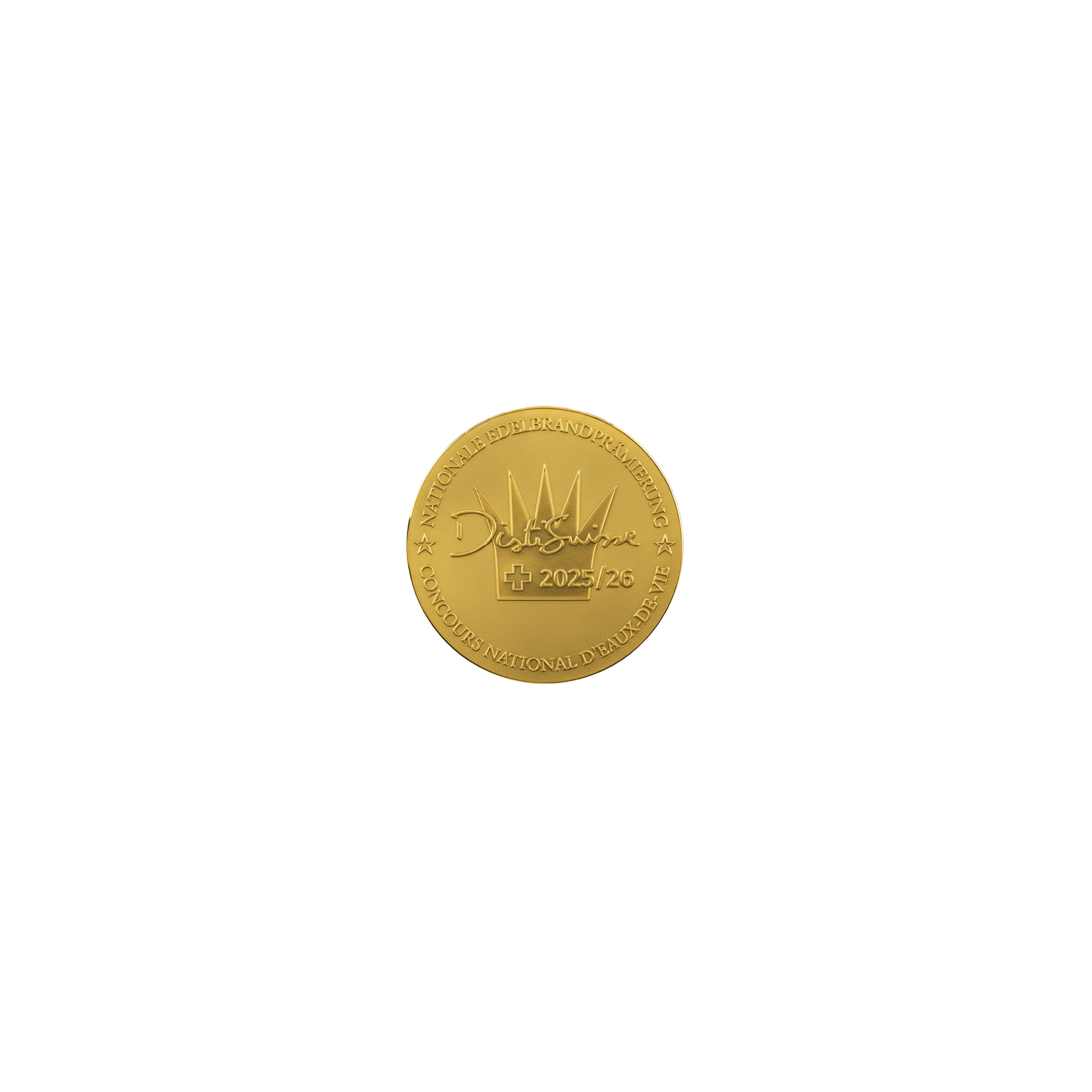
Distisuisse Gold, 93 points. Earned the slow way, without compromise.
Our plum distillate begins with one thing: ripe Damson plums, and nothing else.
The fruit already carries what it needs. The sugar, the aroma, the character are all there. Our job is mostly to stay out of the way.
We don’t add sugar, and we don’t force the fermentation. Instead we use a single wild yeast, isolated decades ago from an old wine bottle, that ferments cleanly while leaving the fruit intact. Part of the craft is knowing when to act and when to wait. No two batches come out quite the same, and we’ve made our peace with that.
We distill twice, in a copper still that softens the spirit and keeps it clear. The passes take out the harshness and leave the fruit. What comes off the still is strong but easy to drink, the kind of thing you pour slowly and share.
Distilling is a balance between water and fire. Too much heat and you scorch the fruit; too little and nothing lifts. The whole skill is holding the two steady, drop by drop, until what comes out is neither harsh nor thin.
We make Slivoo in Hägglingen, Switzerland, but the idea is much older. Across the Balkans, plum brandy (Slivovitz) has been shared at home for centuries. We hold to the same essentials: good fruit, an honest process, and respect for the people who did this long before us.
The address is Swiss now; the rest is inherited.
From fermentation to the last step of assembly, a person does the work.
The weight of the bottle, the set of the label, the curve of the ring: none of it is left to a machine. It’s slow, and it’s deliberate, and it’s more effort than the alternatives. We haven’t found a better way to do it honestly.
Qu4ttro Sagl (Switzerland) | Slivoo® is a registered trademark of Qu4ttro Sagl | team@slivoo.com | +41 79 775 60 65
Copyright 2026 Qu4ttro Sagl. All rights reserved.